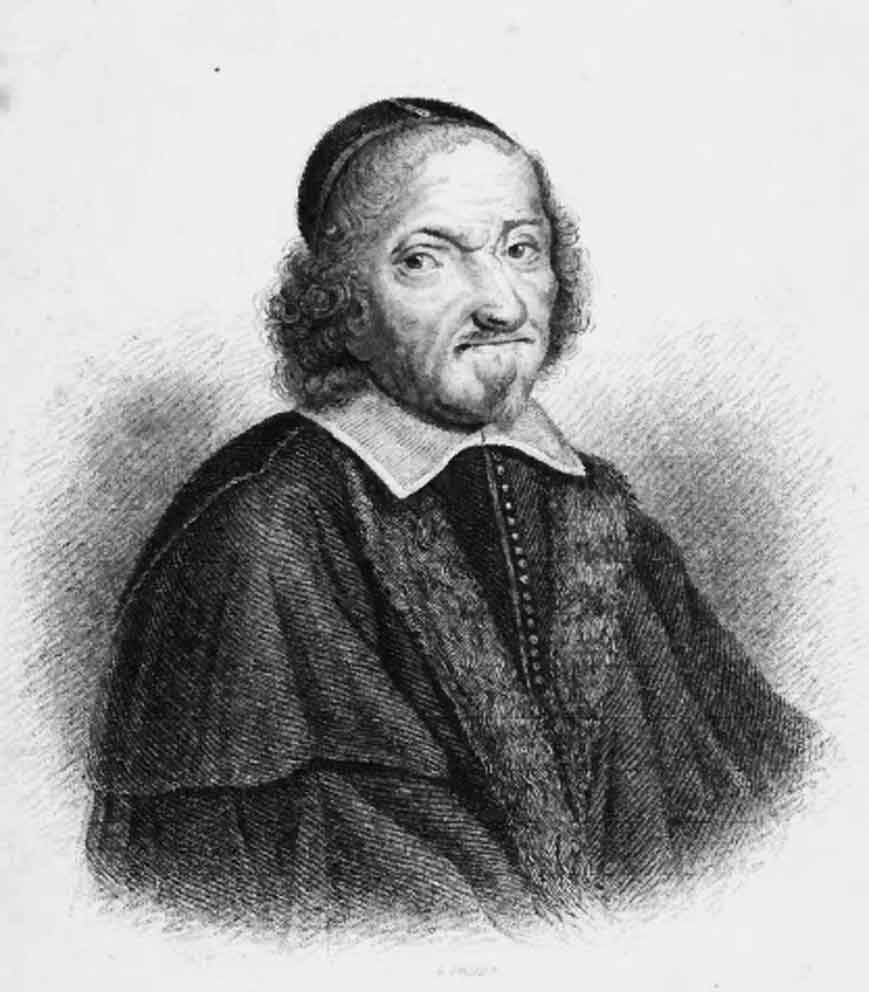
Miles Coverdale was born in 1488 in North Riding of Yorkshire. Little is known with certainty about his parents or early upbringing, yet it is evident that he received a sound education that prepared him for the priesthood. As a young man he entered the Augustinian house at Cambridge, a centre of growing humanist and reforming thought.
At Cambridge he studied theology and came under the influence of Robert Barnes, the prior of the Augustinian friary, who had embraced the new learning and sympathised with the reforming ideas spreading from the Continent. Coverdale was ordained a priest about 1514 and soon became known for his scholarship and piety. During these formative years he encountered the writings of Erasmus and, increasingly, those of Martin Luther, works that stirred in him a desire to see the Scriptures made accessible to ordinary English people.
Conversion to Reforming Principles
By the early 1520s the atmosphere in England was tense. The Crown and Church authorities were determined to suppress Lutheran doctrines, yet Cambridge remained a seedbed of reform. Coverdale gradually moved away from medieval Catholic theology and embraced the evangelical conviction that Scripture alone was the supreme authority in matters of faith.
His association with Robert Barnes proved decisive. When Barnes was prosecuted for heresy in 1526, Coverdale supported him and thereby drew suspicion upon himself. It became dangerous for him to remain in England, and he appears to have left the country for the Continent around 1528. This exile placed him in direct contact with leading Reformers and, most importantly, with the work of William Tyndale, who was already translating the New Testament into English.
Partnership with William Tyndale
Coverdale joined Tyndale in the Low Countries, probably in Antwerp. Tyndale possessed exceptional skill in Hebrew and Greek and was committed to producing an English Bible from the original tongues. Coverdale, though not as accomplished a linguist, was a gifted stylist with a sensitive ear for English prose. The two men worked together revising earlier translations and preparing further portions of the Old Testament.
Tyndale’s arrest in 1535 and subsequent execution in 1536 left his great task unfinished. Coverdale felt compelled to continue the work. Drawing upon Tyndale’s manuscripts, Luther’s German Bible, the Latin Vulgate, and other European versions, he prepared the first complete printed Bible in English.
The Coverdale Bible of 1535
In October 1535 the Coverdale Bible was issued, probably printed in Zürich or Cologne. It bore the title “Biblia: The Bible, that is, the Holy Scripture of the Olde and New Testament, faithfully and truly translated out of Douche and Latyn into Englishe.” Unlike Tyndale, Coverdale did not claim to translate directly from Hebrew and Greek; rather, he acted as an editor and compiler of the best available sources.
This Bible was revolutionary. For the first time English readers possessed the entire Scriptures in their own tongue in a single volume. Coverdale’s translation was marked by warmth, rhythm, and devotional beauty. Many of his phrases later passed into the Great Bible, the Geneva Bible, and ultimately the Authorised Version of 1611. Expressions such as “lovingkindness,” “tender mercy,” and “valley of the shadow of death” reflect his enduring influence on English religious language.
The Great Bible and Royal Favour
The political climate in England shifted when Henry VIII broke with Rome. Thomas Cromwell, the King’s chief minister, sought an authorised English Bible for use in churches. Coverdale was summoned home in 1538 to supervise a new edition based largely on Tyndale’s work.
The result was the Great Bible of 1539, so called because of its large size. Printed in Paris and London, it became the first officially sanctioned English Bible to be placed in every parish church. Coverdale wrote the prologue and oversaw the final revisions, shaping the text that would be read aloud throughout the realm. For a brief period he enjoyed royal favour and even served as almoner to Queen Anne of Cleves.
Derived from Coverdale’s 1535 translation of the Book of Psalms, his later Psalter has remained in continuous use within the 1662 Book of Common Prayer to the present day, and has been preserved, subject to minor revisions, in the 1926 Irish, the 1928 American Episcopal, and the 1962 Canadian editions of the Book of Common Prayer, among others.
Years of Exile under Mary I
The accession of the Catholic Queen Mary in 1553 brought a sudden reversal. Protestant leaders were imprisoned or forced into exile. Coverdale, now in his mid-sixties, fled to Denmark and later to Wesel and Geneva. During these years he assisted English refugees and supported the production of the Geneva Bible (1560), though he was not its chief translator.
His time abroad deepened his pastoral concern. He wrote numerous devotional works, sermons, and letters encouraging persecuted believers. Unlike some Reformers, Coverdale was known for his gentle spirit and conciliatory manner, qualities that won him respect even among opponents.
Bishop of Exeter
Earlier, during the reign of Edward VI, Coverdale had been appointed Bishop of Exeter in 1551. His episcopate was marked by simplicity and zeal for preaching. He sought to reform the clergy, promote the use of the English liturgy, and relieve the poor. Financially he lived modestly and often gave away much of his income.
When Mary came to the throne he was deprived of his bishopric and briefly imprisoned, but his foreign connections secured his release and safe conduct abroad. After Elizabeth I’s accession in 1558 he returned to England, though he was never restored to his see, partly because of his Puritan sympathies and his reluctance to wear certain episcopal vestments.
Final Years and Death
In his later years Coverdale served as rector of St Magnus the Martyr in London and preached frequently. He remained a revered elder statesman of the Reformation, consulted by younger church leaders and translators. Despite advancing age he continued writing and revising religious works.
Miles Coverdale died on 20 January 1569 at the age of about eighty-one. He was buried in the church of St Bartholomew-by-the-Exchange, London; when that building was later demolished, his remains were transferred to St Magnus.
Character and Legacy
Coverdale was not primarily a scholar of original languages like Tyndale, nor a political strategist like Cranmer. His distinctive gift lay in shaping English prose that carried the cadence of Scripture into the hearts of common people. His translation style blended dignity with clarity, avoiding harsh literalism while preserving theological depth.
Miles Coverdale’s life illustrates the costly devotion of those who laboured to place the Word of God in the hands of the people. Though often overshadowed by more famous contemporaries, his contribution shaped the spiritual and linguistic heritage of the English-speaking world. Through his labours the Bible became not a remote Latin relic but a living book read in homes, churches, and marketplaces; a gift for which generations have remained in his debt.




Leave a comment