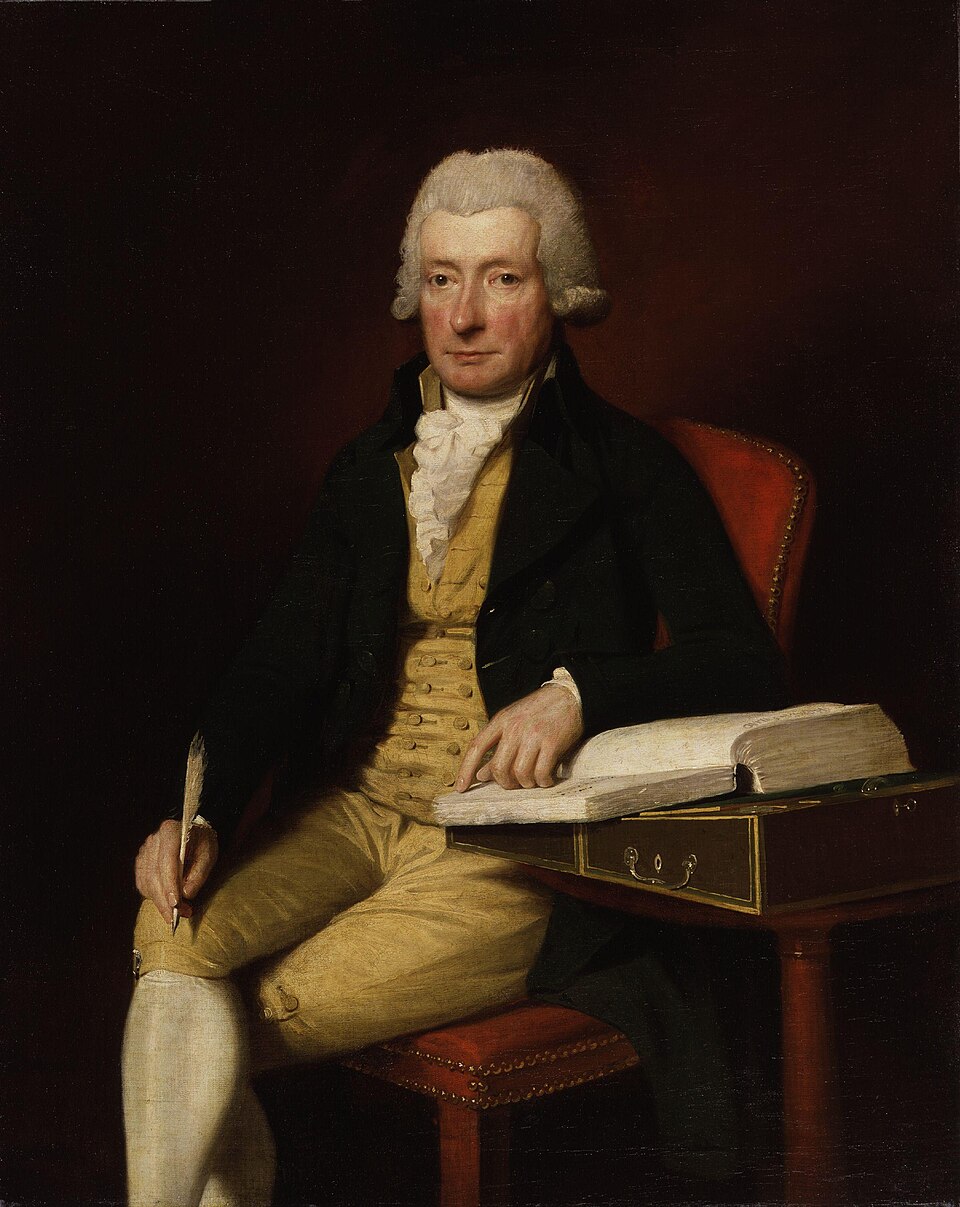
William Cowper (November 26th, 1731 – April 25th, 1800) stands among the most poignant and influential voices of 18th-century English literature. Renowned for his gentle introspection, vivid natural imagery, and sincere religious sentiment, Cowper played a critical role in bridging the gap between the Augustan age of reason and the blossoming Romantic movement. His work resonates with emotional depth, personal honesty, and a profound sensitivity to both nature and human experience, qualities that continue to draw readers into his poetic world.
Born in Berkhamsted, Hertfordshire, Cowper was the son of a clergyman and grew up in an environment shaped by learning and faith. His early years, however, were marked by emotional difficulty. His mother died when he was six, an event that left an enduring impact on his psyche and would later inspire one of his most deeply affecting poems, “On the Receipt of My Mother’s Picture.” Throughout his life, Cowper battled severe depression and anxiety, and several mental breakdowns interrupted both his personal and creative aspirations.
Despite being trained as a lawyer, he never practiced law, as his fragile mental health made public life agonizing for him. After a crisis early in adulthood, he withdrew from social ambition and turned increasingly toward poetry, religion, and a quiet life close to nature.
Cowper’s poetry represented a shift away from the heavily classical and satirical styles of earlier 18th-century poets such as Alexander Pope. Instead, his verse embraced emotion, simplicity of language, and the beauty of everyday rural life. In poems like “The Task,” Cowper captured the countryside with affectionate detail, fields, gardens, animals, and the changing seasons paint his pages with warmth and familiarity.
His love for animals, especially his pet hares, has become an endearing part of his literary identity. He viewed nature not merely as scenery, but as a companion and source of spiritual comfort. This sensitivity foreshadowed the Romantic poets, Wordsworth, Coleridge, and others, who would soon elevate emotion and nature to the heart of English poetry.
Cowper’s Christian faith influenced much of his writing, often intertwining with themes of redemption, mercy, and spiritual struggle. He collaborated with the hymn writer John Newton to produce the influential Olney Hymns (1779), a collection that includes several enduring hymns such as “God Moves in a Mysterious Way.” These hymns reveal not only his devotional fervor, but also his deep wrestling with doubt, guilt, and the search for divine guidance.
His personal battles with mental illness gave his religious poetry a unique emotional honesty. Rather than idealized faith, Cowper presented belief as a journey, marked by suffering yet illuminated by hope.
Cowper was taken ill with edema, or dropsy, in the spring of 1800 and died on 25 April. He was laid to rest in the chapel of St Thomas of Canterbury at St Nicholas’s Church in East Dereham, where a stained-glass window honours his life.
Near Weston Underwood in Buckinghamshire, where Cowper once lived, stands a folly called Cowper’s Alcove, built in 1753 by the Lord of the Manor of Weston House, a member of the Throckmorton family. Cowper is known to have visited the alcove frequently for poetic inspiration, and it is mentioned in “The Task”. The Buckinghamshire county council green belt estate later dedicated the folly to Cowper and installed a plaque bearing the verse from “The Task” that refers to the alcove.
In 1823, Cowper’s letters were published posthumously, drawn from the original correspondence held by his kinsman John Johnson.
St Peter’s Church in Berkhamsted contains two memorial windows for Cowper: the east window, made by Clayton & Bell in 1872, shows him at his writing desk with his pet hares and bears the inscription “Salvation to the dying man, And to the rising God”, a line from Cowper’s poem “The Saviour, what a noble flame”); an etched glass window in the north aisle carries lines from “Oh! for a closer walk with God” and “The Task”. The same church also has a memorial tablet dedicated to the poet’s mother, Ann Cowper. Cowper is furthermore commemorated alongside George Herbert by another Clayton & Bell stained-glass window in St George’s Chapel, Westminster Abbey.



Leave a comment